
State agencies are staging equipment, hardening roads and levees, and urging Californians to sign up for local alerts before this week’s storm
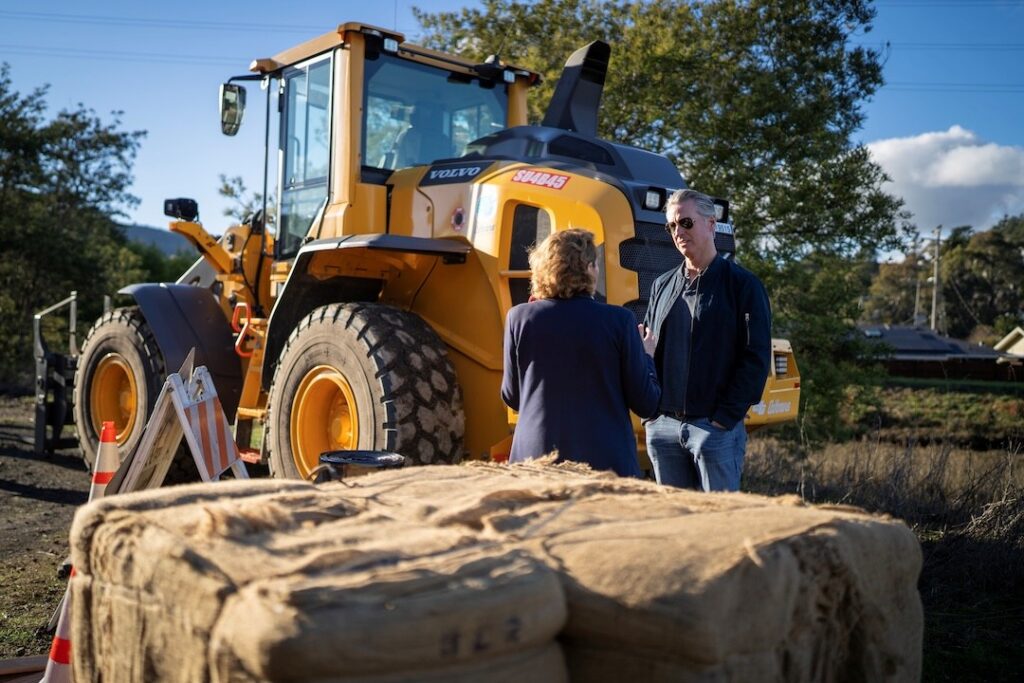
Flood-fighting supplies and equipment at a Department of Water Resources site in Mill Valley are ready to deploy as part of Governor Newsom’s El Niño preparations.
What you need to know: An atmospheric river storm reaches the North Coast Tuesday and Wednesday, just as many Californians hit the road for Thanksgiving. Paired with the year’s highest tides, it could bring flooding, road closures, and tough travel conditions. State crews and supplies are in place, and Californians can sign up for local alerts and make a plan at ready.ca.gov.
MILL VALLEY, CA – As a Pacific storm carrying an atmospheric river approaches Northern California during one of the busiest travel weeks of the year, Governor Gavin Newsom today highlighted the state’s work to protect communities from flooding as part of statewide El Niño preparations, and urged Californians to visit ready.ca.gov to sign up for local alerts.
The storm is expected to reach the North Coast on Tuesday and Wednesday, and will overlap with king tides, the highest tides of the year. California agencies have staged supplies, readied crews, and strengthened infrastructure ahead of these storms.
“California took early action to prepare for El Niño, and we’re continuing that work by strengthening flood defenses, positioning emergency supplies, and coordinating with local emergency crews to reduce risks to communities. This storm can still bring dangerous and unexpected conditions.
“As Californians head into the holiday, take a few minutes to check travel conditions, sign up for local emergency alerts, and make a plan to keep your family safe.”
Governor Gavin Newsom
This work builds on months of preparation. On September 21, Governor Newsom proclaimed a state of emergency to get ahead of a potentially historic El Niño winter, directing agencies to protect vulnerable communities and prepare before severe weather arrives. Since then, state agencies have staged emergency supplies, inspected levees and dams, strengthened highways and coastal protections, and worked alongside local emergency crews to prepare for flooding and other storm impacts.
How California is preparing storm and flood defenses
Agencies across state government have spent months preparing for El Niño storms and have added resources ahead of this week’s storms. That work includes:
- Flood-fighting supplies ready to go. Over the past several months, the Department of Water Resources (DWR) has positioned 211 shipping containers packed with flood-fighting supplies at sites across the state, including the Mill Valley site Governor Newsom visited on Friday. Its statewide supplies include more than 4.4 million sandbags, over 52,000 feet of portable flood barriers that crews can quickly deploy to divert water, and 400,000 tons of rock for emergency levee repairs.
- Rescue crews in position. Ahead of this week’s storms, Cal OES approved requests from multiple counties, including Del Norte, Humboldt, Marin, San Francisco, Alameda, Solano and Ventura counties, to position fire engines, crews, and heavy equipment so they can respond quickly to emergencies. Building on the new swift water rescue vehicles, boats, and equipment the state delivered to 13 local fire departments in October, swift water rescue and urban search and rescue teams are assigned to Marin County and San Francisco County. Cal OES is posting updates on approved resources and locations as preparations continue.
- Preparing highways for storms. Caltrans crews are clearing drains and culverts, reinforcing slopes, checking that pump stations are ready, placing sandbags near burn scars and other trouble spots, and keeping about 1,300 pieces of equipment ready at more than 120 maintenance yards. Crews are ready to switch to around-the-clock storm shifts. Caltrans’ statewide operations center and its North Coast and Bay Area districts are on heightened alert for this week’s storm. On Monday, crews finished installing a temporary flood barrier near the San Francisco-Oakland Bay Bridge Toll Plaza to protect westbound Interstate 80 from high-tide flooding. The westbound shoulder there will stay closed while crews monitor it, so drivers should allow extra time. Crews are also installing temporary flood protection along Doolittle Drive near Oakland International Airport and at the Posey Tube between Oakland and Alameda. Caltrans is asking drivers to slow down and move over for crews working along the road. In recent months, Caltrans has also worked on projects like raising flood-prone stretches of State Route 37 and repairing seawalls along the Pacific Coast Highway.
- Protecting the coast. State Parks has closed Border Field State Park and part of Carlsbad State Beach because of expected flooding. It is also protecting the historic cottages at Crystal Cove State Park with sandbags, and it used the emergency proclamation to speed repairs at Malibu Pier and MacKerricher State Park. Check current park closures before you visit.
- National Guard ready to help. Under Governor Newsom’s El Niño emergency proclamation, the California National Guard (CalGuard) remains fully prepared to support state and local flood response operations. If activated through the state’s mutual aid system, CalGuard can deploy a broad range of capabilities, including high-water vehicles, aviation assets, search-and-rescue personnel, and logistics support to safeguard lives and property. Through proactive planning and close coordination with Cal OES, CalGuard stands ready to respond swiftly if needed.
- Medical support on standby. The state Emergency Medical Services Authority has delivered medical supplies to a Cal OES warehouse in Southern California to support any emergency shelters, and its ambulance strike teams, mobile medical teams, and mobile medical shelters are ready to deploy if counties or Tribal partners request them. Cal OES and the California Health and Human Services Agency are co-leading the Priority Population Task Force to identify and close gaps for people who may need extra help during flooding, travel disruptions, or power outages. The California Department of Social Services (CDSS) pre-positioned 30 shelter trailers across counties and Tribal areas. Each trailer contains the equipment and supplies needed to operate a 75-person shelter, including accessible cots and durable medical equipment. Pre-positioning these resources enables communities to open shelters quickly and sustain operations if roads become impassable; expands sheltering capacity in rural, Tribal, and under-resourced communities; ensures accessible equipment is available from the onset of shelter operations; and reduces reliance on emergency deliveries during hazardous conditions and periods of competing demand.
- Conservation Corps crews trained and ready. More than 1,500 young adults serving in the California Conservation Corps (CCC) stand ready to be dispatched to any flood or storm-related emergency after completing their flood fighter training. During the CCC’s 50 years of operations, staff and Corpsmembers have mobilized to every major flood incident in the state. With El Niño storms already impacting California, the CCC completed its training early in order to meet the state’s needs.
Stay safe on the road
As Thanksgiving travel gets underway, the California Highway Patrol (CHP) urges drivers to prepare for rapidly changing conditions, including flooding, landslides, debris flows, and road closures.
- 📱Know before you go. Check Caltrans QuickMap for road closures, traffic conditions, and chain controls. Follow local forecasts and emergency instructions. Get local emergency alerts here and follow trusted sources.
- 🚗 Slow down and leave more room. Reduce speeds on wet roads and increase the distance between vehicles so there is more time to stop. Avoid cruise control in wet conditions.
- 🔧 Prepare your vehicle. Check tires, windshield wipers, and other essential equipment. Turn on headlights when weather requires continuous use of windshield wipers.
- 🚧 Never drive through floodwater. Standing or moving water can conceal a damaged or washed-out roadway. Turn around safely and find another route.
CHP officers will continue monitoring road conditions, responding to weather-related incidents, and coordinating with transportation and emergency response partners statewide.
What is El Niño?
El Niño refers to the periodic warming of sea surface temperatures in the eastern Pacific Ocean. Usually, the tropical western Pacific is warmer than the tropical eastern Pacific; in El Niño, however, this pattern reverses, and the eastern Pacific warms significantly. This changes circulation and precipitation patterns worldwide. Although specific, localized impacts are unpredictable, El Niño often produces more frequent and intense storms over California. These storms can produce dangerous flooding, landslides, debris flows, erosion, and other dangerous impacts.
This year, California has already experienced coastal flooding attributed to El Niño as “Kelvin waves” raise sea levels and offshore Pacific hurricanes (fueled by warm water in the eastern Pacific) drive strong waves battering the California coast.